How To Create More Engaging Workshops For Your Association’s Members: 5 Fresh Ideas
Last updated on November 4, 2025
Whether located around your annual meeting or as a standalone event, workshops can be an effective way to supercharge engagement.
And right now, solid engagement is something that associations could use a bit more of. According to the 2024 edition of MCI’s Association Engagement Index, two-thirds of association members regularly access the content organizations produce. But less than a third regularly engage in what the report calls “association life”—regular engagement with events or fellow association members. Over time, this could lead to more passive members and even churn.
That sounds like a tough nut to crack, but structured workshops could be exactly what you need to make everything “click” for your members, says Liz Lathan, CMP, the cofounder and Chief Marketing Officer of The Community Factory, an event-design firm.
The targeted value that workshops bring, provides a ton of value to association members, and that’s what we’re really trying to do, right? An association exists for education, certification, advocacy. You know, whatever its true purpose is, it’s so that people can leave with a benchmark understanding of industry best practices and then go execute against those so that we’re all raising ourselves to a higher level rather than just kind of coming in out of nowhere, running your events or program and then moving on with your life because you think you did a great job. So having people in a room together, following a framework, having people understanding how to implement these things in a consistent way so that the quality goes up, I think that’s where the real value is. Yeah, I think, you know, when we talk about spontaneous think tanks, the idea is peer to peer conversation and communication, but in a more facilitated way because we’ve all heard it from our board of directors and our association leaders oh, we tried birds of a feather sessions and they didn’t work. Oh, we put lunch table topics out and nobody actually talked about them. So I think that people have a kind of a fear of trying peer to peer because it goes off the rails and just never works. But when you take the format of a spontaneous think tank, which was born from the idea of the old 1980s concept of an unconference, and then the more modern concept of design thinking in that you we use these big sticky notes, the six by eight not the little bitty ones but these big sticky notes. And we invite the participants to come in and write a challenge they’re trying to solve today, on a sticky note, one challenge per note, and we fill the wall or windows or whatever your space is. With all these challenges, we call it the wall of woes. And so everybody puts the challenges up. And again, that gives them this moment of acceptance of oh my gosh, I’m trying to solve that, too. Oh, my gosh, I’m not alone. I thought it was just me and you see it right in front of you. And then we ask the participants if you see a challenge on the wall that you’ve solved in your business, go write your name on it, because we may ask you to share how you solved that problem. And now people start connecting names with, you know, solutions with problems and problems with solutions and start recognizing ‘oh I should talk to you later’. From there, we look at those sticky notes on the wall and pull it down and say, Hey, looks like Bob has solved this problem. Bob, would you mind sharing in a peer to peer session for 10 minutes how you solve it and then 20 minutes just facilitate conversation where everybody pitches in and so we start to create these concurrent sessions with probably 5 to 6 different topic groups where we’ve invited the people to actually lead a conversation. You can vote with your feet, choose the one you want to go to. If it’s not the sessions right, you get up and move to another one. And so the peer to peer is spontaneous. It’s a think tank because you’re there to solve a problem, but it’s facilitated in a way that you actually assigned a leader to the conversation. And so even if the leader’s a terrible speaker, even the leader goes off the rails a little bit, the people can bring it back because they’ve all been given this opportunity to participate. And it’s not like this this strange moment where ‘oh this person must leave it’ no, they can bring it back, and it becomes this collective kind of group therapy moment where they’re solving each other’s problem. Absolutely. So there’s a metric that I like to use that we call ‘Return on Emotion’ We did a research study to identify which emotions need to be evoked in an event or experience in order to drive the connections that drive business. Because everyone knows that, you know, you have to evoke emotions in your marketing. But what are those emotions? And so at the end of this research study, we found there were five emotions that need to be evoked, and that is: Hope Motivation, Acceptance, Active and Adventure. And so if you think about this from the standpoint of just a workshop and you think about Hope, people are coming in expecting to understand and learn something new and make connections. So when they leave, they have a better tomorrow than they had today. Motivation. We hope at the end of this workshop they’re going to go put it into action Adventure. They’re going to do something a little out of their comfort zone. They’re going to get in there and they’re going to like either, you know, build their personal brand if that’s what the workshop is or how to do a strategic event plan, if that’s what you know, and just be like, ooh, it’s really going to push me somewhere. And then the Active and Accepted parts are where I think the workshop really shines. The Active part is that you are actively going to do something. You are physically with a group of people, you are actively involved in making this your own. The Accepted part is where it shines. You’re in a room of people actively talking about the same challenge that they are all experiencing together. So you feel a sense of belonging, you feel a sense of acceptance. You feel that sense that you are with your people. And that’s where workshops really shine. When you go into a room with 5000 people in a keynote hall and you can’t see the people on the left or the right because the room so dark, you’re missing that piece of camaraderie, in the workshop just shines. It’s accountability, buddies. I think before you leave, there are two things that every workshop leader should do. One is make everybody write a letter to themselves about what hey will be doing, let’s say six months from now. And then the leader should take those letters and then in six months mail them to everybody. So people should have a self-addressed stamped envelope and they all write a letter, fold it up, and then the facilitator mails it to just to check in on people so make themselves their own accountability buddies. And then the second one is pair them up in the room to create an accountability buddy before they leave which is to check in with each other one month from now and then three months from now. And then after they get their letter in the mail. And so these moments giving them a way to get a reason to connect and then a way to connect. So if your association has a Slack channel or an online focus discussion group or, you know, a place to post that that site, for them to have asynchronous conversation and telling them, Hey, come here and check in with your accountability buddy and post how you guys are doing. And did you use this content and how did you use it and share a case study and show us how you went back and applied this in your business so that people are posting. But the facilitator needs to make sure that they are also able to be in there, and I don’t think it has to be, you know, let’s pay the facilitator for six months of continuing work. I think it’s just it doesn’t have to be like the actual workshop leader, but an education committee leader or somebody in the room who just volunteers. Again, like we said before, someone has to be imbued with that leadership power and then people can go in and connect. I think it’s a great way to have an association is a 365 day community anyway, right? So now give people a reason to go to that site and give people a reason to check in with each other. I think that that’s vital. And if you’re association is on social media, whether it’s, you know, Facebook, TikTok, LinkedIn, whatever, putting someone in charge of posting some of those things more publicly, like, hey, it’s been 45 days since we held this workshop. And a couple of our accountability folks have checked in. These are a few things that they’re doing. We’re so proud of you for changing the way that you do business. I think that workshops are a vital component of any conference or any association’s educational program. I think that people want to engage their brain and I think people want to engage with other people. And so we know that our attendeees come to our events to meet other people and to learn something. And when you can put those in a room together and actually have that camaraderie get built along with education and that cognitive engagement that they’re going to go do something with it. This is the vital role that workshops play in any educational program.
Watch the video to see workshop expert Liz Lathan share her top tips on how to build engaging workshops for association members.
“I think when you’re in the room, having a more workshop format that is facilitated, that involves group work, that involves conversation, that involves an actual reason to get on a plane and be with people in a room? It provides so many different levels of engagement,” she says.
Of course, not all workshop formats are created equal. But the right techniques, strategies, and approaches can not only help drive engagement while everyone’s in the room, but can potentially move the needle when everyone’s back at work.
Lathan, who has spent more than two decades in the events space, shared a few strategies with us around how to build workshops that support your business goals:
Table of Contents
Engaging Workshops: What Attendees Need
In a nutshell, workshops are standalone events, driven by facilitators and built around a specific topic. Generally, workshops focus on a narrowly relevant or emerging subject. For example, you might have a day-long event targeted specifically at hiring managers within your membership, or you might focus intently on broader trends in artificial intelligence. These workshops may convey specific tactics or advice, or they may be highly interactive.
As Lathan notes, when done well, they represent a distillation of what an association does best—education, supporting certifications, and advocating for their sector.
“It’s so that people can leave with a benchmark understanding of industry best practices, and then go execute against those—so that we’re all raising ourselves to a higher level,” Lathan says.
Effective Workshop Designs
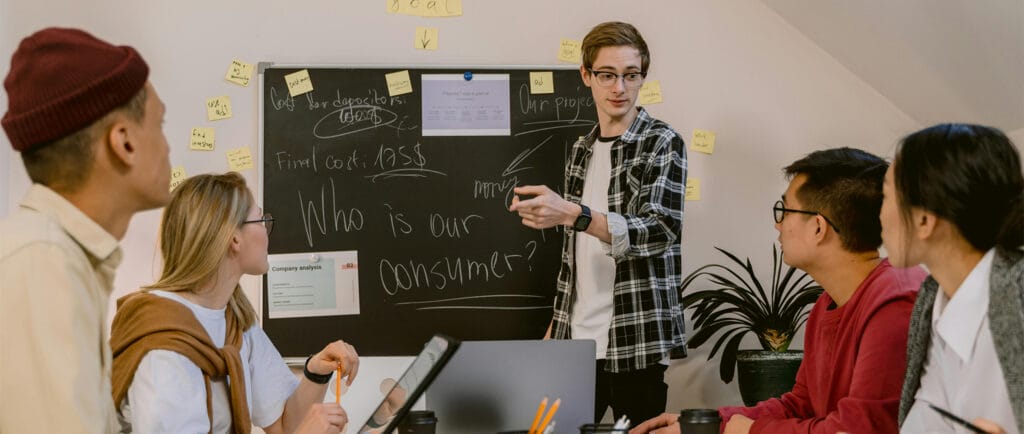
Often, the most engaging workshops are built around a specific structure or framework—an area that Lathan specializes in, having developed concepts such as the Spontaneous Think Tank, which leans on a wall of sticky notes and crowdsourcing to help drive conversations around attendees’ business challenges. It’s an approach Lathan says combines elements of a design thinking process and an unconference event—but with facilitation to drive engagement.
“It’s a think tank because you’re there to solve a problem, but it’s facilitated in a way that you actually assigned a leader to the conversation,” she says. “And so, even if the leader is a terrible speaker, even if the leader goes off the rails a little bit, the people can bring it back because they’ve all been given this opportunity to participate.”
In general, Lathan says structured events generate consistent results and discussion.
“Having people in a room together, following a framework—having people understand how to implement these things in a consistent way, so that the quality goes up—I think that’s where the real value is,” she says.
Engaging Workshop Ideas
Building for engagement won’t get you far if your workshop attendees aren’t ready to engage. Having wallflowers in the audience can be a major limiting factor for growth.
For example, if your workshop is tied to an annual meeting, attendees who prefer listening to lectures may feel lost in a highly interactive session. But with the right audience, there’s real potential for engagement to extend beyond the moment.
A few years back, Latham helped conduct a study that led to a new term for engagement, Return on Emotion, the concept that certain emotions need to be evoked to drive business connections. Workshops, she says, are the perfect testbed for attendee engagement.
“You feel a sense of belonging, you feel a sense of acceptance, and you feel the sense that you are with your people. And that’s where workshops really shine,” Lathan says. ”When you go into a room with 5,000 people in a keynote hall, you can’t see the people on the left or the right because the room’s so dark.”
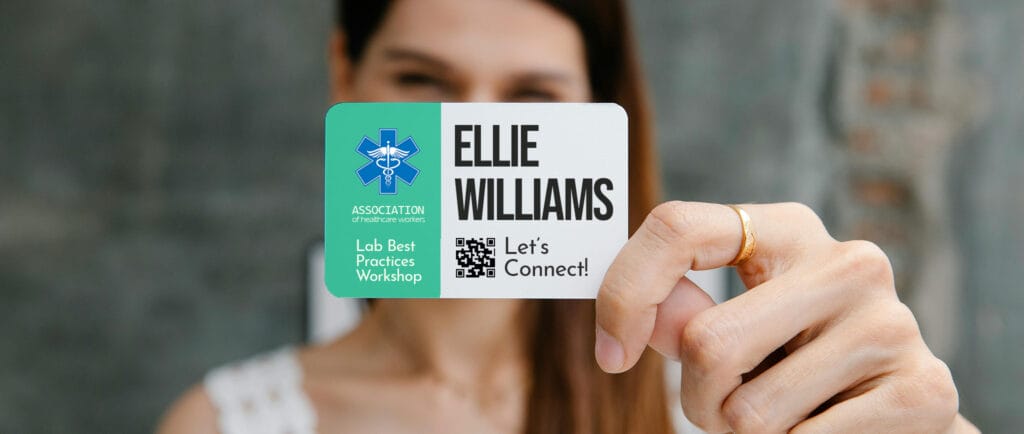
One strategy that could help break the ice? A well-designed name badge that makes it clear you know who you’re talking to. “The name needs to be big,” Lathan says. “And I firmly believe that the first name is what matters more than anything.”
Accountability: Post-Workshop Goal Setting
A good workshop can bring people out of their comfort zones and get them thinking differently about their roles. But how can you ensure that the workshop actually drives some true change?
Lathan suggests adding in a dash of accountability—and that accountability can even be analog in nature.
“Make everybody write a letter to themselves about what they will be doing, let’s say six months from now,” she suggests. “And then, the leader should take those letters and then in six months mail them to everybody.”
The result, Lathan says, makes attendees their own accountability buddies. Speaking of accountability buddies, that could be something else that attendees bring home with them—a pledge they’ll chat with a fellow attendee a month after the meeting, and then after they each get their respective letters.
If you’re looking for a more digital approach, online community tools, such as chat platforms or networking apps, could also prove effective for keeping the discussion going. Even if your facilitator’s contract doesn’t extend beyond the event, association employees or volunteers could take over.
“An association is a 365-day community, anyway,” Lathan adds.
Build On Your Workshop’s Success
Finally, don’t be afraid to promote the work attendees are doing on social media. After some time has passed by (Lathan suggests 45 days), post about what attendees are doing with the knowledge they gained from the workshop on TikTok, LinkedIn, or your social media platform of choice.
By playing the long game, a workshop suddenly isn’t just a small-scale event anymore—it’s pushing engagement forward within your organization and beyond.
“When you can put those in a room together and actually have that camaraderie get built, along with education and that cognitive engagement, they’re going to go do something with it,” Lathan says. “This is the vital role that workshops play in any educational program.”
And it might just make your next workshop one that potential attendees won’t want to miss.
To find out how EventMobi can help you create more engaging meetings and events throughout the year, sign up for a free demo!